Within the scope of the HISER project, sixteen material flow analysis case studies were carried out for the main CDW streams – bricks, concrete, gypsum and wood in four case study countries – Belgium, The Netherlands, Spain and Finland.
Main findings of the study are summarized in Figures 1 and 2. The study suggests:
- In a short term “Brick-to-brick” may happen only in Belgium, where abundant of CDW brick is available and the CDW streams are well monitored.
- Concrete recycling has biggest potential for circular construction. For all the case studies countries, concrete manufacturing can provide a sufficient sink for all the recycled concrete aggregates.
- Significant gypsum based CDW recycling can only happen when selective demolition and CDW monitoring is well implemented. The Belgium case shows a good example for the gypsum waste management.
- CDW wood treatment must consider cascading use according to the local context instead of a simple recycling goal. Finland has the largest wood fraction in its CDW but all of them are incinerated for energy recovery, as the country is rich of wood resource and wood recycling is economically not competitive.
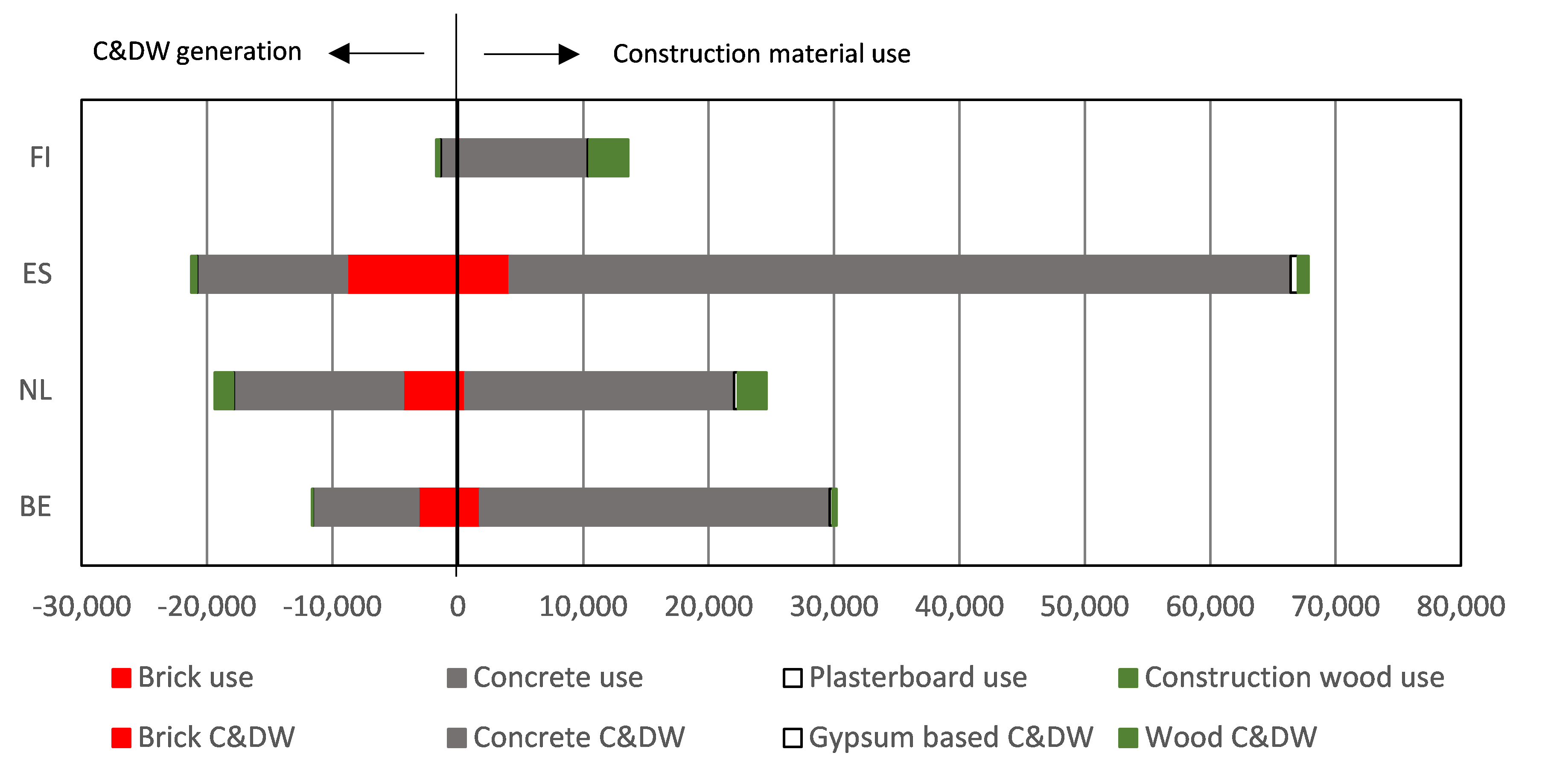
BE-Belgium; NL-The Netherlands; ES-Spain; FI-Finland
Figure 1: Construction material use and C&DW generation in the four case study countries (kt)
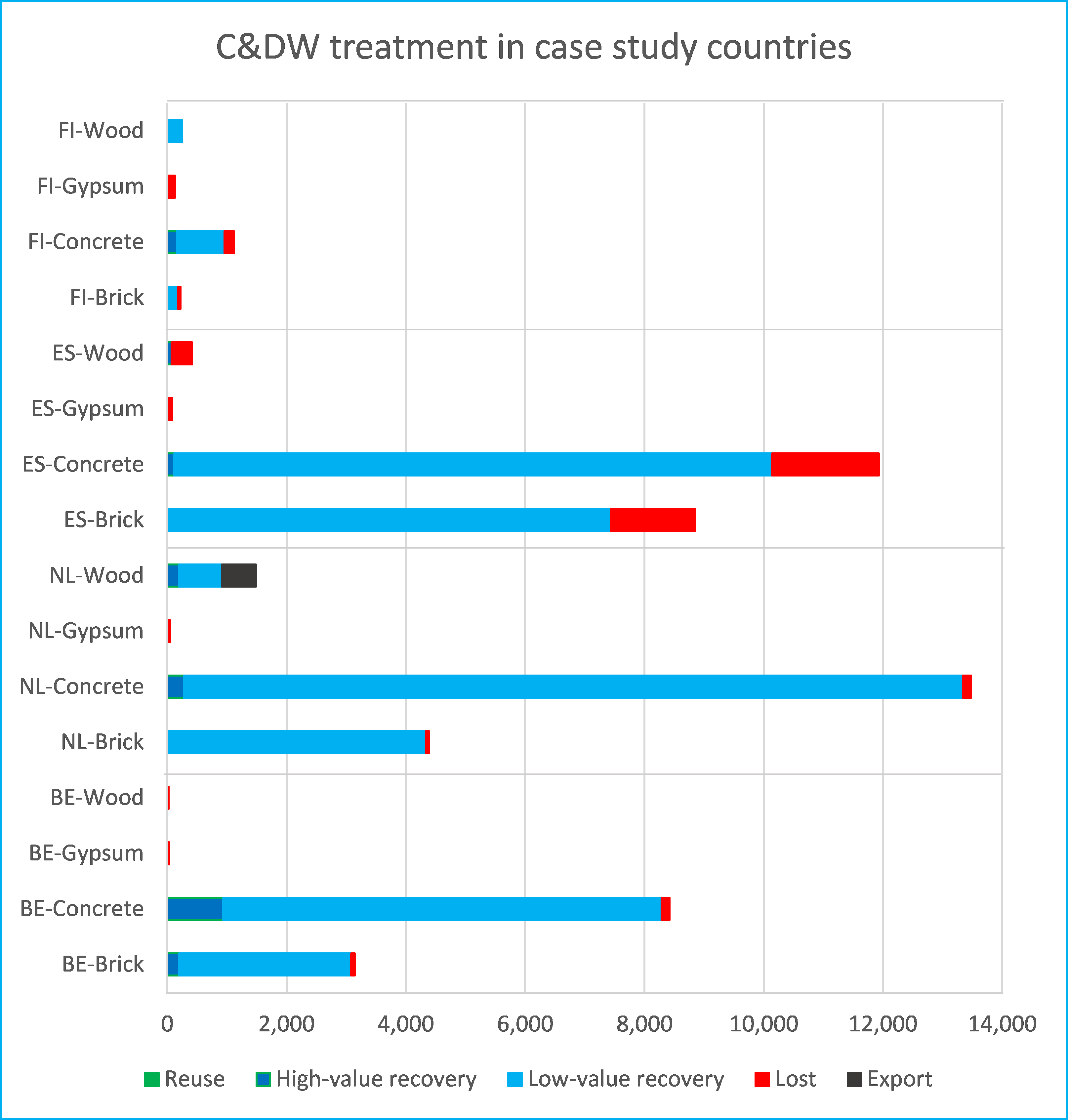
BE-Belgium; NL-The Netherlands; ES-Spain; FI-Finland
Figure 2: C&DW treatment in the four case study countries (kt)
Note: Years of the data are not harmonized. Most available recent data are collected per material per country between 2012 and 2014. For wood fraction, energy recovery is counted in low-value recovery.