An efficient recovery of raw materials from buildings requires an enhanced segregation of materials at the source, aiming to capture a higher value of those resources. Nevertheless an accurate and swift identification of materials, quantities and demolition methods is necessary before the selective demolition works start.
HISER project has developed a Building Information Modelling (BIM) tool to support the collection and management of information of materials through smart processing of data in the pre-demolition stage. The software interface has been oriented to laptops and touch screen systems. It can be used in almost any portable device supporting WebGL. The expected benefits include improved reliability of calculation, easier traceability of materials and quicker evaluation of alternative demolition/recovery options.
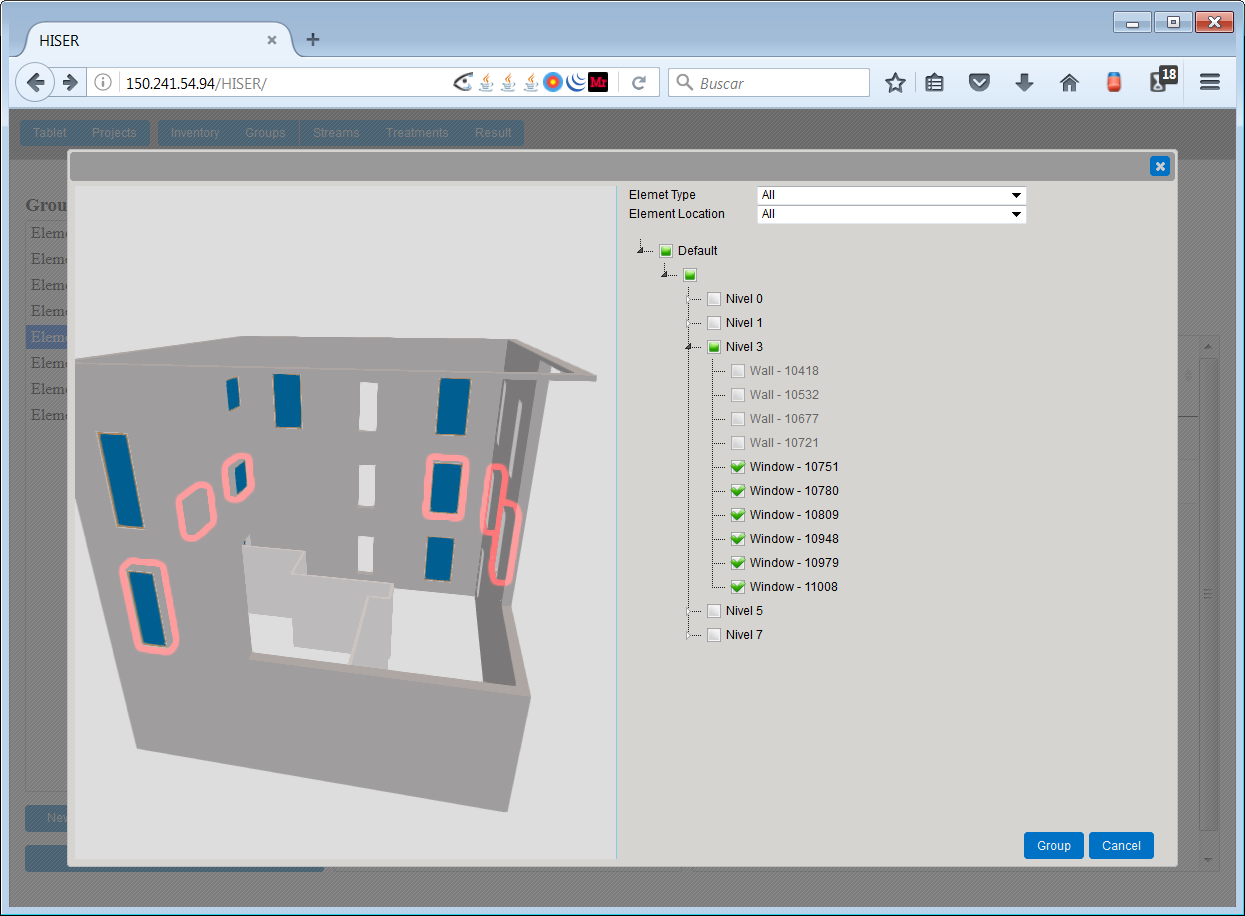
Using an existing BIM model of the building, without defined properties of the entities, a portable editor is used to produce an inventory of the building, which nowadays is principally done by hand or supported by basic tools. The user will identify the elements present in the building using a database linked to the tool, which will provide relevant information for the completion of the building inventory, such as: deconstruction processes usable for each element (e.g. disassembly); definition of materials and assignation of codes from the European List of Waste; or formulas for the calculation of weight and volume of each of these materials.
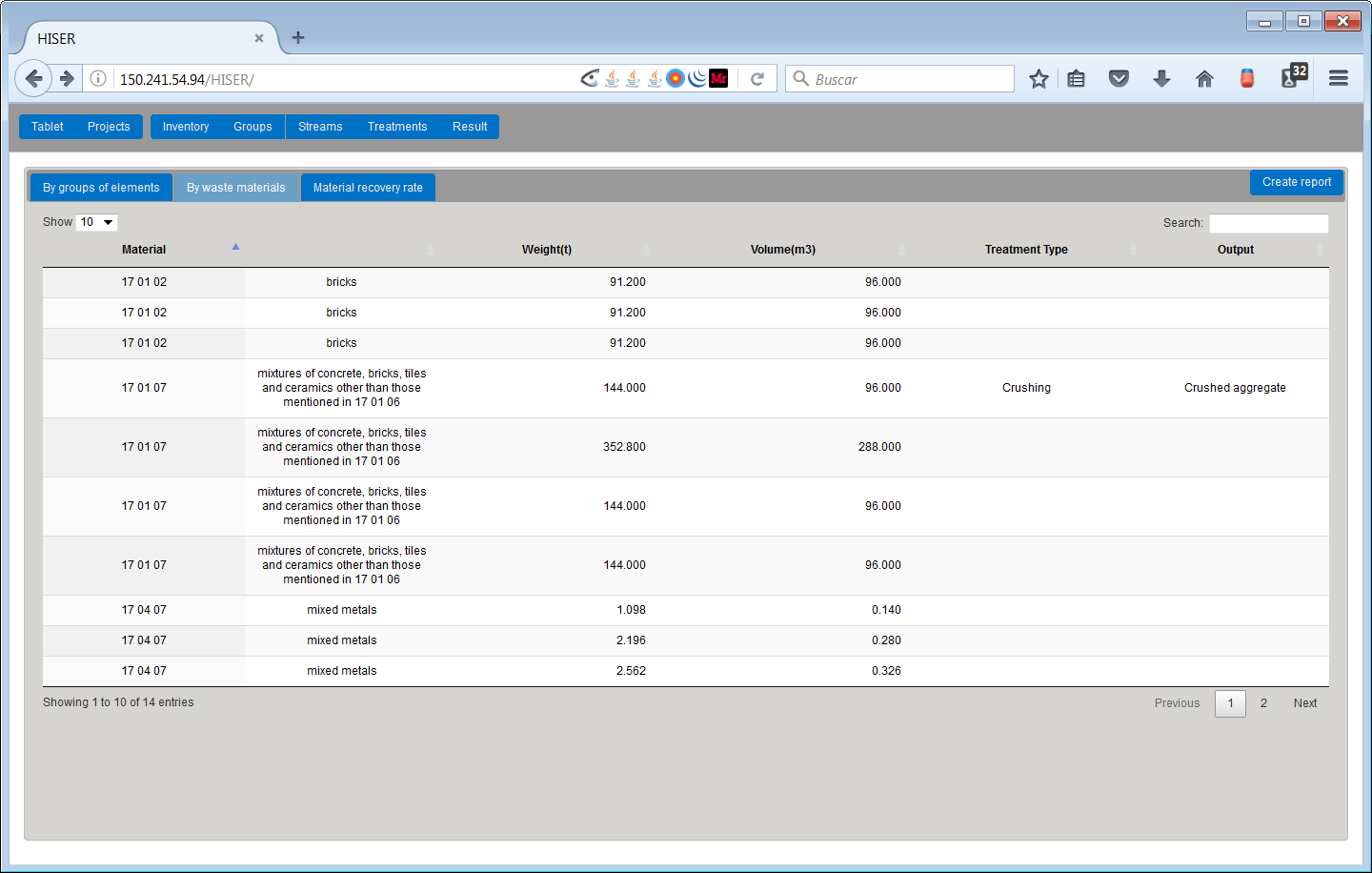
The second step supports the desk study for drafting the waste audit i.e. the actual waste streams that will be produced depending on the (disassembly, removal, demolition) processes planned for the different elements in the building. Subsequently, corresponding reuse, recycling, energy recovery or disposal options can be established.
 |
 |
|
| Screen captures: Inventory of elements (left); results by waste materials (right) | ||
This tool will be demonstrated in several demolition projects through four case studies including a range of geographical situations and typologies in 2017. For each project, the demolition planning will be carried out by means of (a) traditional practices (e.g. inventory based on visual inspection, etc.) (b) definition of BIM geometric model, identification and quantification of waste materials, data processing by means of the BIM-SD and automatic generation of waste management documents. After the execution of the selective demolition, time and cost for each alternative will be compared.
David García, Tecnalia