
The automatic sorting of mixed stony fractions in high-grade concrete and ceramic aggregates to be recycled later in new materials for building applications is currently being investigated within the HISER project. In this context, the research is focusing on developing a specific separation line based on hyperspectral imaging techniques for obtaining three classified fractions in one singe stage.
A relevant stream from construction and demolition waste (C&DW) consists of mixtures of stony materials basically composed by concrete aggregates and ceramics (mostly bricks and tiles). So far, the conditioning and separation technologies (crushing systems, screening, magnetic separators or density based separators) used by recycling sector have limitations to produce high-grade recycled aggregates fostering a recovery based on circular economy approaches. Thus, nowadays the main uses of these stony mixtures are foundations in construction works. However, a shift towards higher added value applications requires developing novel and cost-effective recycling solutions to obtain high purity recycled concrete and ceramic aggregates to be used as secondary raw materials in new building products (lower CO2 footprint cements, structural concrete and ceramic bricks), as intended in HISER.
One basic step to achieve the above objective is to make progress in the development of automatic sorting technologies capable of recognising effectively in motion between concrete and ceramic particles mixed in stony fractions. In this context, a new advanced sensors based sorting prototype is being developed within HISER project. This sorting line has been designed to split the input in three output fractions in one single stage: “grey” debris (composed by mortar / concrete aggregates and natural stones), “red” debris (composed by ceramics, bricks, tiles and other ceramics) and impurities (plastics, wood, gypsum, glass or paper/cardboard).
The first stage of the research has consisted of selecting five groups of reference samples (“grey” and “red” debris materials) among four batches of C&DW mixed aggregates coming from different EU countries (ES, FR, BE and NL). These patterns have been used to investigate the automatic identification of stony materials, and taking into account these results the most effective recognition technique to be implemented in the future sorting line has been chosen.
As a preliminary study a spectral analysis of the stony patterns with subsequent classification has been carried out by means of a handheld near infrared (NIR) spectrometer (KUSTA 4004P with integrated measuring head PSP, LLA Instruments GmbH). After building a two-stage hierarchical PLS-DA classification tree, three different spectral ranges have been considered for sorting: 1.4 - 1.9, 1.4 - 1.7 and 1.7 - 1.9 µm. The first range is the full spectral analysis of the KUSTA 4004P spectrometer. As a conclusion of this static spectral analysis the 1.7 - 1.9 µm wavelength range is required to get a satisfactory classification between “grey” and “red” materials. So, further trials based on hyperspectral imaging (HSI) have been carried out in real time (300 Hz), and two hyperspectral imagers (RED-EYE 1.7 and 2.2, inno-spec GmbH) with different spectral sensing ranges have been assessed. In this case, good classification results have been obtained with the RED-EYE 2.2 imager (wavelength range: 1.2 – 2.2 µm). As a result of the current research it has been concluded that hyperspectral imaging is a very promising technique to support successfully the automatic identification and sorting between “grey” and “red” materials within the 1.2 – 2.2 µm bandwidth (being essential the range 1.7 - 2.1 µm).
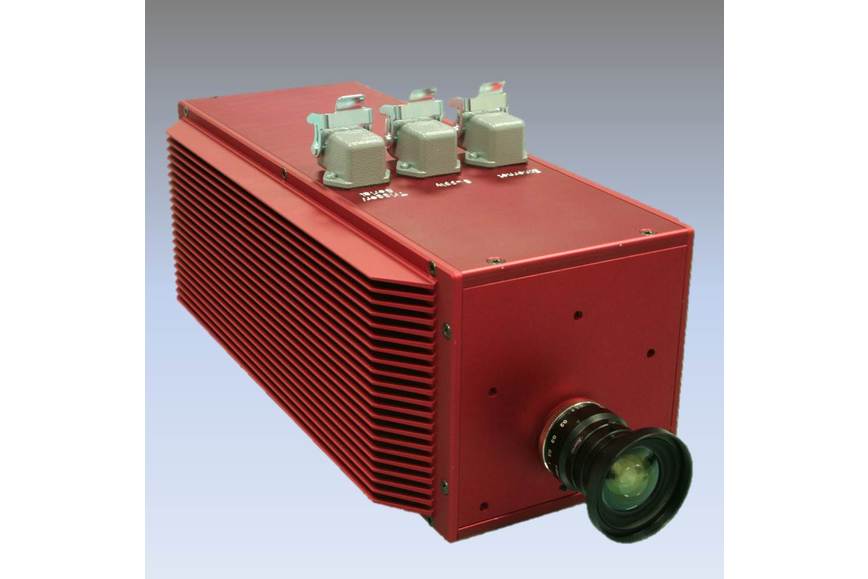
Figure 1: RED-EYE imager (inno-spec GmbH, Germany)
Íñigo Cacho (GAIKER)
Frank Hollstein (RTT Steinert)